After bamboo activated carbon reaches saturation, how should it be regenerated to keep costs under control? Thermal, steam, and chemical regeneration differ sharply in applicability, iodine-value recovery, and economics. This article compares the three routes based on actual industrial operating data.
Three regeneration methods at a glance
| Factor | Thermal | Steam | Chemical |
|---|---|---|---|
| Temperature | 800–900 °C | 100–150 °C | Ambient–60 °C |
| Equipment | Rotary kiln / multi-hearth | Steam generator + tower | Chemical bath |
| Equipment investment | ¥2M–¥5M | ¥0.5M–¥1M | ¥0.1M–¥0.3M |
| Energy per ton | 1.2–1.8 GJ | 0.3–0.5 GJ | 0.05–0.1 GJ |
| Iodine recovery | 85–95% | 60–75% | 50–65% |
| Reusable cycles | 5–8 | 3–5 | 2–4 |
| Mass loss per cycle | 5–10% | 3–5% | 8–12% |
| Best fit | Large water-treatment plants | VOC solvent recovery | Specific chemical adsorption |
| Cost per ton (CNY) | ¥1,500–¥2,500 | ¥500–¥800 | ¥300–¥600 |
Thermal regeneration: best recovery, highest investment
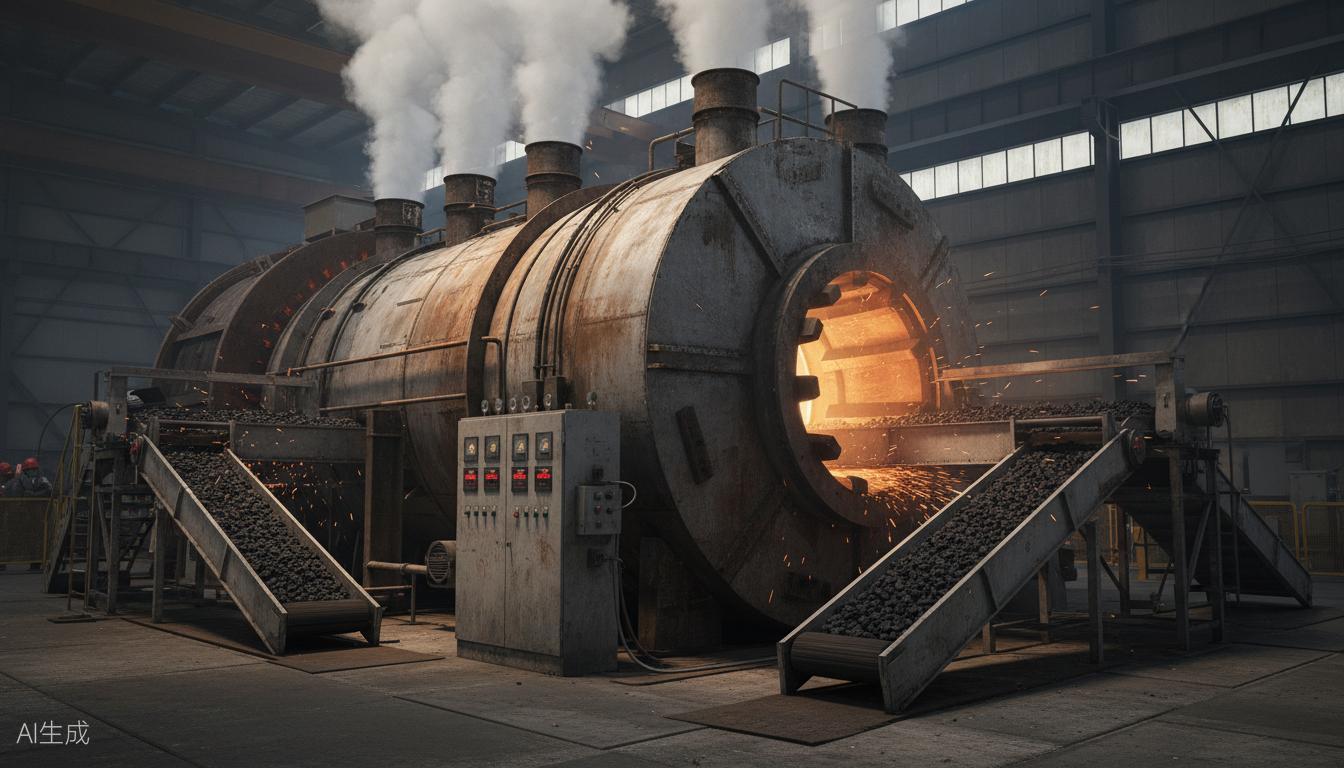
Thermal regeneration heats the spent carbon to 800–900 °C in an inert atmosphere, pyrolyzing or gasifying adsorbed organics and restoring the pore structure. This is the most thorough method, achieving 85–95% iodine-value recovery. Equipment investment for a rotary kiln is ¥2–5 million with high energy demand, making it suitable for plants treating more than five tons per day. Each regeneration cycle loses 5–10% of the carbon through burn-off, and after five to eight cycles the carbon should be replaced.
Steam regeneration: best for VOC recovery
Steam regeneration uses high-temperature steam (100–150 °C) to strip the carbon bed, desorbing VOCs while condensation carries away excess heat. Equipment investment is moderate, and it works well for solvent recovery and industrial VOC abatement. Iodine-value recovery is 60–75%, lower than thermal, but sufficient for most industrial applications. Recovered VOCs can be condensed for reuse.
Chemical regeneration: low cost with limitations
Chemical regeneration soaks the spent carbon in acid, alkali, or solvent to dissolve or react with adsorbed species. Equipment investment is lowest and operation is simple. Iodine-value recovery, however, is only 50–65%, and spent chemicals may cause secondary pollution. This method fits specific chemical-adsorption scenarios or emergency regeneration.
Decision guide
| Scenario | Recommended method | Reason |
|---|---|---|
| Large plant (>5 t/day) | Thermal | Best recovery, amortized equipment |
| VOC solvent recovery | Steam | Solvent can be condensed and reused |
| Small project (<1 t/day) | Outsource thermal or replace | Self-built not economical |
| Specific chemical adsorption | Chemical | Targeted, low equipment cost |
| VOC treatment (no recovery value) | Steam | Moderate cost, simple operation |
Economic analysis: regenerate or replace?
Take bamboo activated carbon with iodine value 1,000 mg/g as an example. New carbon costs about ¥8,000 per ton. Thermal regeneration costs about ¥2,000 per ton and restores iodine value to about 900 mg/g (90% recovery), equivalent to ¥7,200 worth of adsorption. Net saving is roughly ¥5,200 per ton. Over five regeneration cycles, total saving can reach about ¥20,000 per ton after accounting for burn-off loss. For plants using more than ten tons per year, the payback period for a self-built thermal regeneration unit is about two to three years.
Need a regeneration plan for your bamboo activated carbon system? We can help with equipment selection, process design, and cost analysis for thermal and steam regeneration.
Request Quote