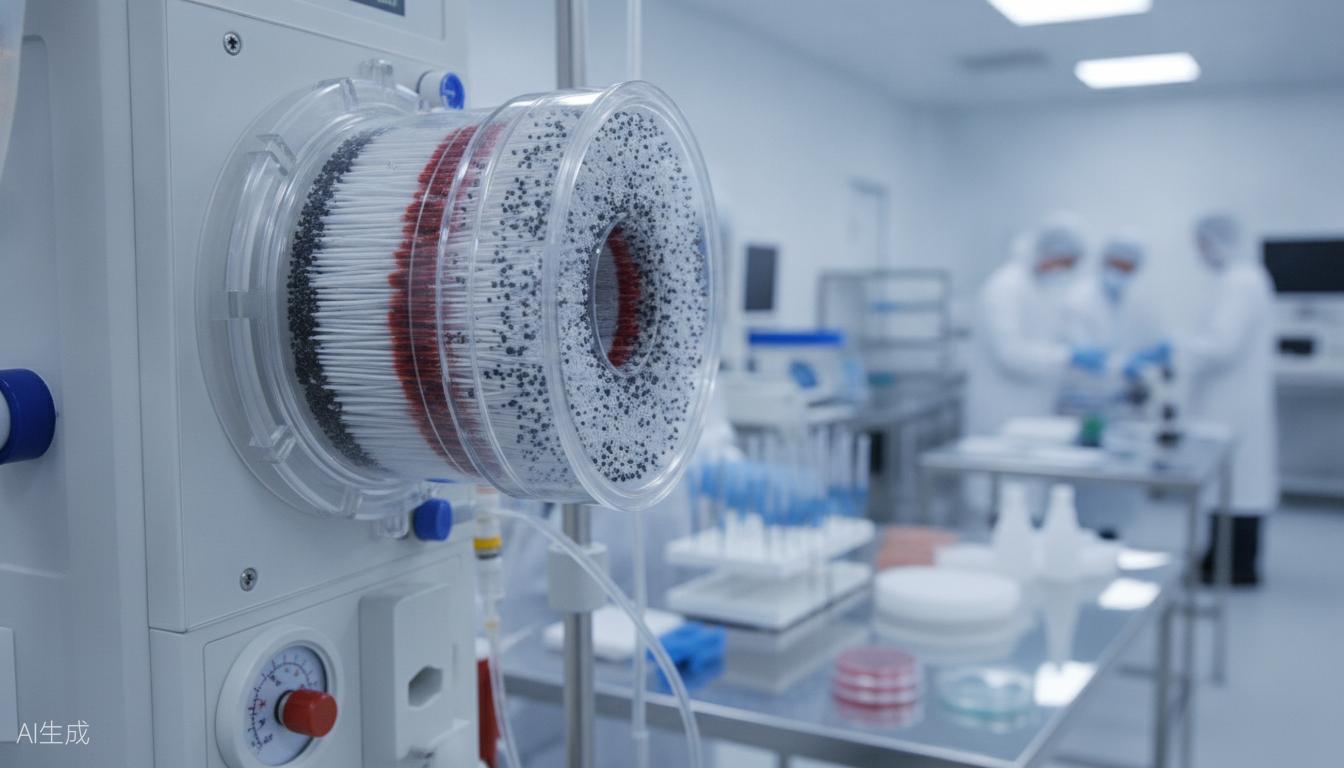
Blood purification, including hemoperfusion and artificial liver support, is a critical technology for treating uremia, drug poisoning, and liver failure. Activated carbon in hemoperfusion adsorbs middle-molecule toxins such as beta-2-microglobulin and bilirubin. Medical-grade activated carbon faces extreme purity requirements: endotoxin below 0.5 EU/mL, strict particle-release control, and full ISO 10993 biocompatibility. Can bamboo activated carbon meet these standards?
Key medical-grade carbon specifications
| Parameter | Medical-grade requirement | Bamboo carbon | Coconut-shell carbon |
|---|---|---|---|
| Iodine value (mg/g) | ≥900 | 1,050 | 1,100 |
| BET surface (m²/g) | ≥1,000 | 1,200 | 1,300 |
| Mesopore volume (mL/g) | ≥0.4 | 0.55 | 0.50 |
| Endotoxin (EU/mL) | <0.5 | 0.3 | 0.2 |
| Particles >25 μm (/mL) | <10 | 8 | 5 |
| pH | 6.0–8.0 | 7.2 | 7.5 |
| Heavy metal Pb (μg/g) | <5 | 3 | 2 |
| Biocompatibility | Pass ISO 10993 | Pass | Pass |
Medical-grade processing
Upgrading ordinary bamboo activated carbon to medical grade requires special processing: repeated rinsing with ultrapure water to remove soluble impurities; high-temperature steam activation followed by rapid cooling to seal surface micropores and reduce particle shedding; gamma-ray sterilization at 25–45 kGy; endotoxin testing per batch (LAL test); and particle counting by light-obscuration method with fewer than ten particles above 25 μm per milliliter. Processed cost is roughly three to five times that of ordinary bamboo carbon, but still lower than medical-grade coconut-shell carbon.
Clinical performance data
| Application | Bamboo carbon result | Coconut-shell carbon result | Note |
|---|---|---|---|
| β2-microglobulin clearance | 65–75% | 70–80% | Single 4 h perfusion |
| Bilirubin adsorption | 85–92% | 88–95% | Artificial liver support |
| Drug-poisoning clearance | Good | Good | Broad-spectrum adsorption |
| Platelet drop rate | 15–20% | 10–15% | Anticoagulation needed |
Certification requirements
Medical-grade activated carbon, as a medical-device raw material, needs: China NMPA raw-material filing plus finished-product registration; EU CE as a Class IIa medical-device component; and US FDA DMF filing plus 510(k). Bamboo activated carbon has not yet entered the medical market at scale; the main bottlenecks are batch-to-batch consistency and limited clinical-data accumulation.
Need medical-grade bamboo activated carbon with test data? We can provide ISO 10993-compliant test reports and clinical-trial support.
Request Quote