Microwave safety is one of the most common questions buyers receive about bamboo molded meal boxes. The practical answer is not simply yes or no. It depends on the food type, heating time, wall thickness, moisture level, and whether the meal box uses any coating or lamination that changes its heat behavior.
What is the real microwave-use boundary?
| Heating Scenario | Typical Performance Direction | Buyer Concern |
|---|---|---|
| Moist or water-rich food | Usually more manageable because temperature tends to stay closer to the boiling range | Short heating can be acceptable if the product is properly designed |
| Oily or high-fat food | Surface temperature can rise much faster | Local overheating can drive deformation, coating risk, or scorching |
| Long heating time or high power | Structure stress rises quickly | Warpage, edge lift, and dry cracking become more likely |
Why should buyers review coatings before making a microwave claim?
Because a bare molded pulp tray and a laminated or coated product do not behave the same way. Some barrier layers are fine only within a narrower temperature window, while others may soften, lose performance, or change migration behavior under higher heat.
What should be checked besides visible deformation?
- Migration risk under the intended heating condition, not only at room temperature.
- Odor or sensory change after heating.
- Whether the product remains structurally usable after reheating with real food types.
- Whether the labeling instructions reflect realistic heating limits.
How should buyers label microwave use more safely?
A stronger approach is to state the actual power-and-time boundary rather than applying a broad microwave-safe claim. If oily foods, coated products, or longer reheating are part of the real use, the warning should reflect that directly.
A practical procurement approach
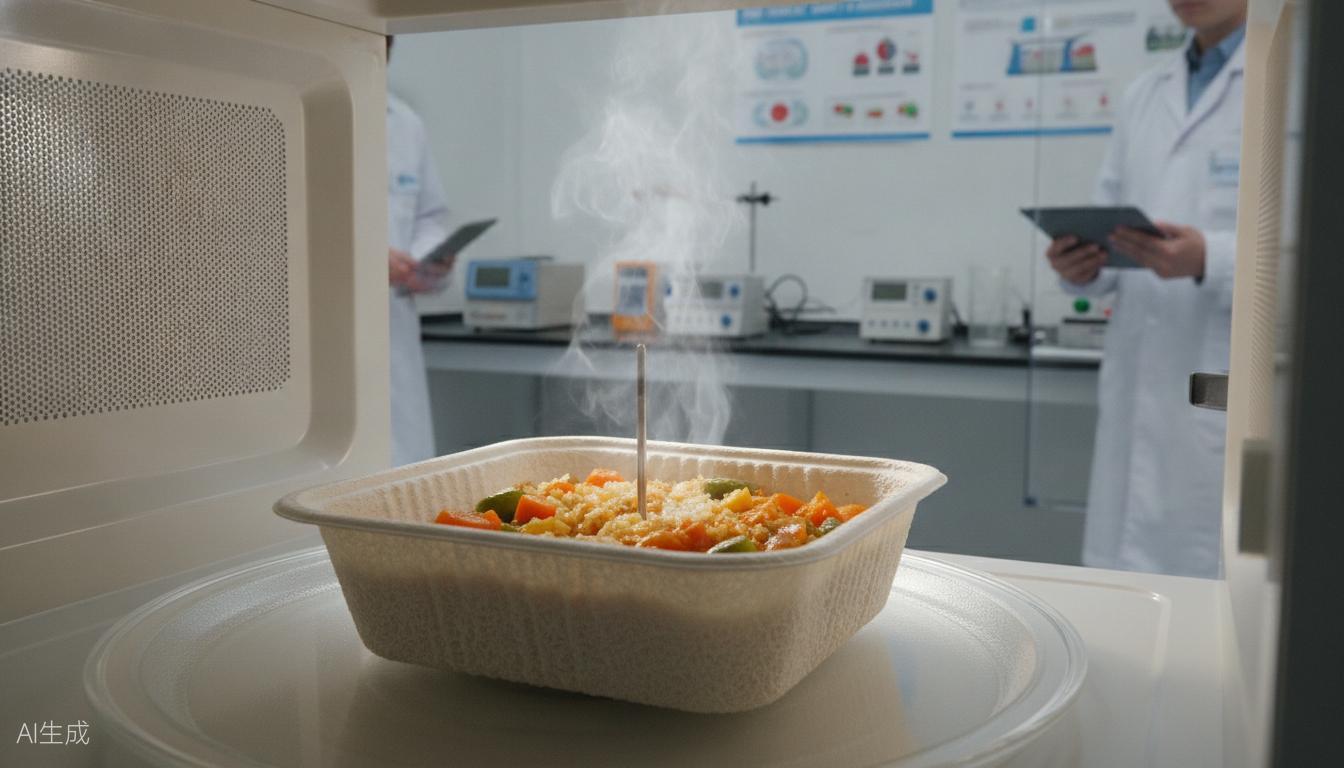
When evaluating microwave use, buyers should run tests with real food types such as rice, noodles, oily prepared meals, and higher-moisture dishes. A generic heating result without food context often gives a misleading sense of safety.
If your bamboo molded tableware will be marketed for microwave use, define the real food scenario, power level, and heating duration before approving the packaging claim. Microwave suitability should be supported by actual use conditions, not by a broad assumption.
Request Quote