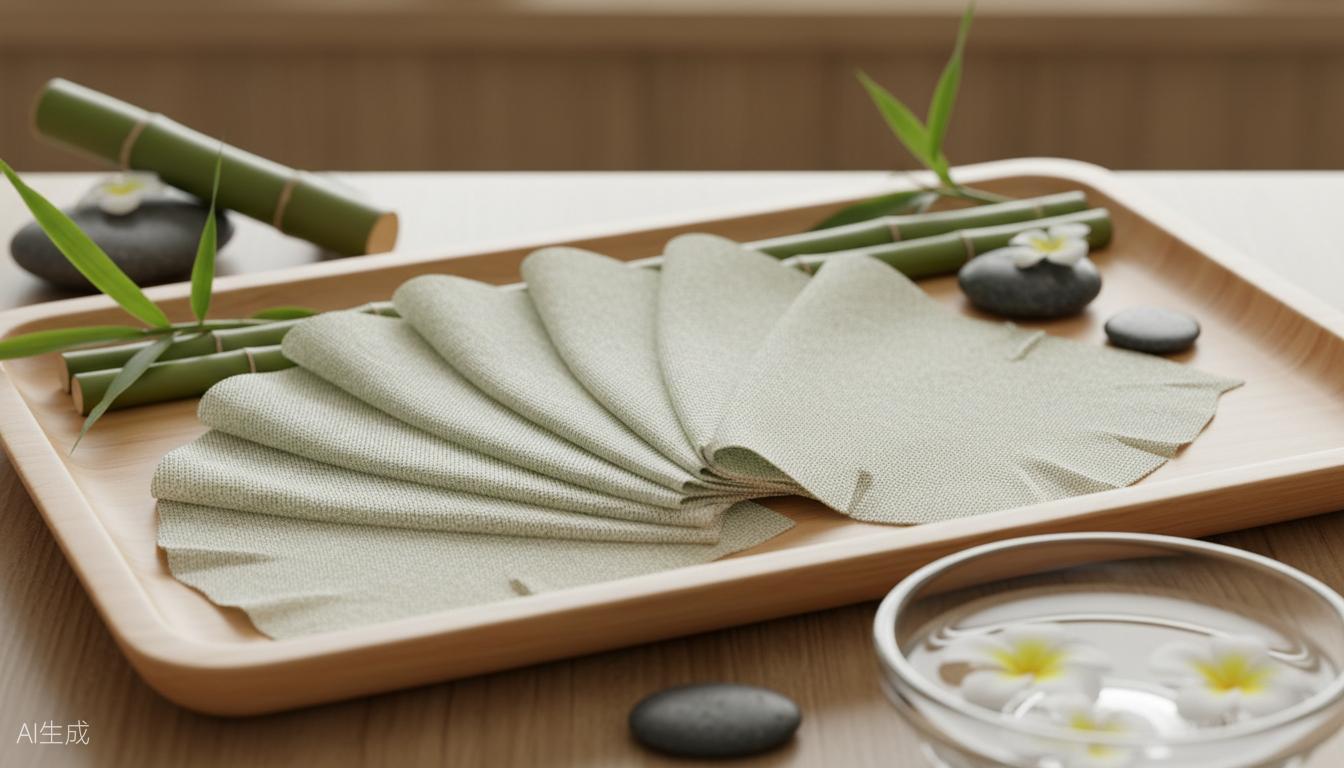
Facial-mask sheet selection is a balance between serum load, fit, release, and user feel. Bamboo fiber nonwoven can be attractive because it combines a natural-fiber story with good moisture behavior, but it still needs to be compared with silk and lyocell by finished use rather than concept alone.
How does it compare with silk and lyocell?
| Property | Bamboo Fiber | Silk | Lyocell |
|---|---|---|---|
| Typical fineness | 1.2-1.8 dtex | 0.8-1.2 dtex | 1.3-1.7 dtex |
| Moisture regain | 13-15% | 10-11% | 12-13% |
| Typical sheet cost | About RMB 25-45 per thousand | About RMB 80-150 | About RMB 35-60 |
| Main position | Balanced natural-fiber and cost story | Premium feel | Balanced mainstream cosmetic route |
Where does bamboo fiber perform well?
- High serum load with comparatively low drip
- Good stretch and face-fit stability
- Natural-fiber branding at a lower cost than silk
- Potentially stronger sustainability messaging than some alternatives
If your beauty project is evaluating bamboo mask sheets, compare serum load, face fit, and user feel with the actual formula. The right sheet depends on the finished mask system, not the substrate alone.
Request Quote