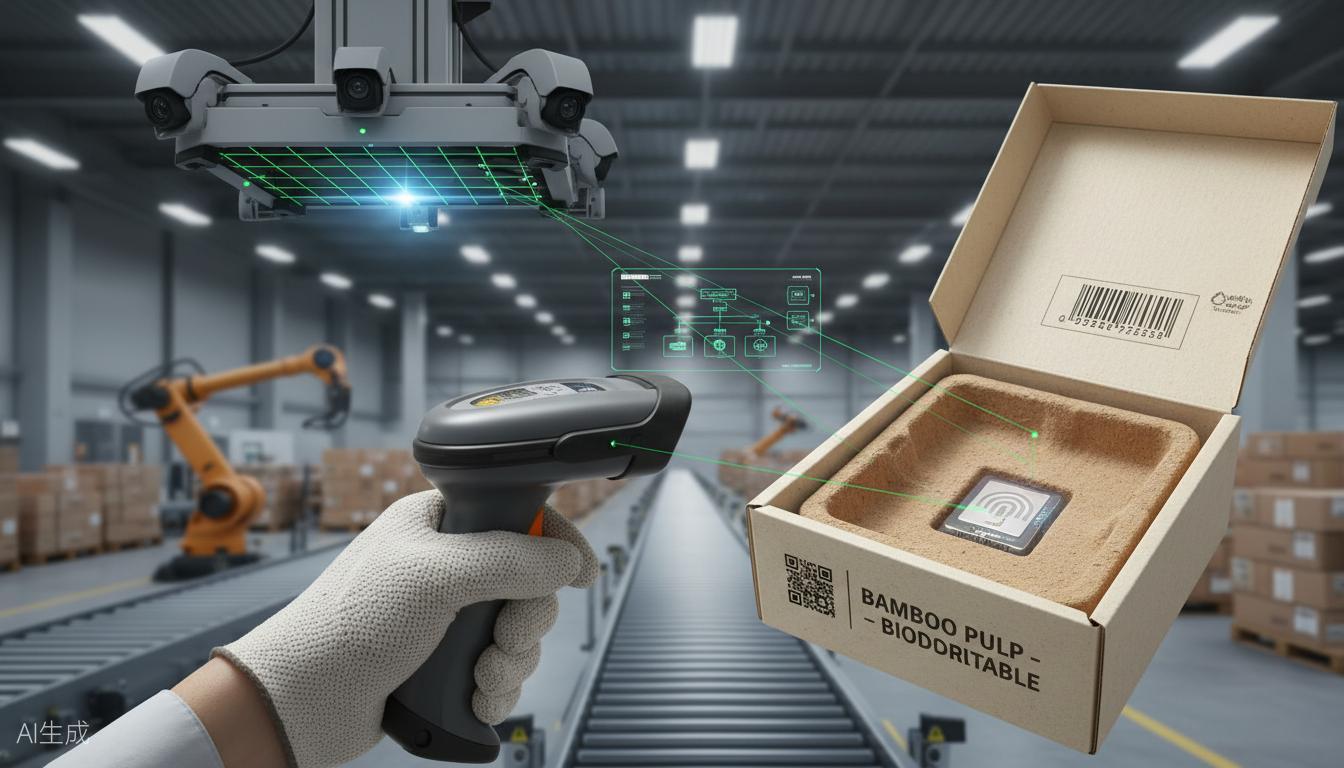
Traceability is increasingly important in retail, warehouse, and export packaging. On bamboo molded pulp, buyers need to check whether the surface can support barcode readability and whether RFID labels still perform well enough in the intended logistics environment.
Why is barcode performance harder on molded pulp?
Because the fiber surface is rougher and more textured than coated paperboard or plastic. That can reduce print sharpness, especially for very small codes or lower-quality direct-print methods.
What approaches usually work better?
| Tracking Method | Why It Can Work | What Buyers Should Watch |
|---|---|---|
| Thermal-transfer or applied barcode label | Often gives more consistent readability than low-quality direct printing | Adhesive durability and moisture tolerance matter |
| Laser or engraved marking | Can work well where contrast is sufficient | Surface tone and code size still matter |
| Applied RFID label | Flexible for warehouse and retail use | Read distance depends on tag type and placement |
| Embedded RFID | Can improve tamper resistance and permanence | Read distance may drop and process complexity increases |
Why can RFID still work well on molded pulp?
Because molded pulp is nonmetallic and does not create the same signal-blocking issues as metal packaging. The main challenge is usually read distance and placement optimization rather than signal shielding.
If your project needs barcode or RFID traceability on bamboo molded pulp, test the actual code size, print method, and label placement before finalizing the packaging artwork or tray tooling.
Request Quote