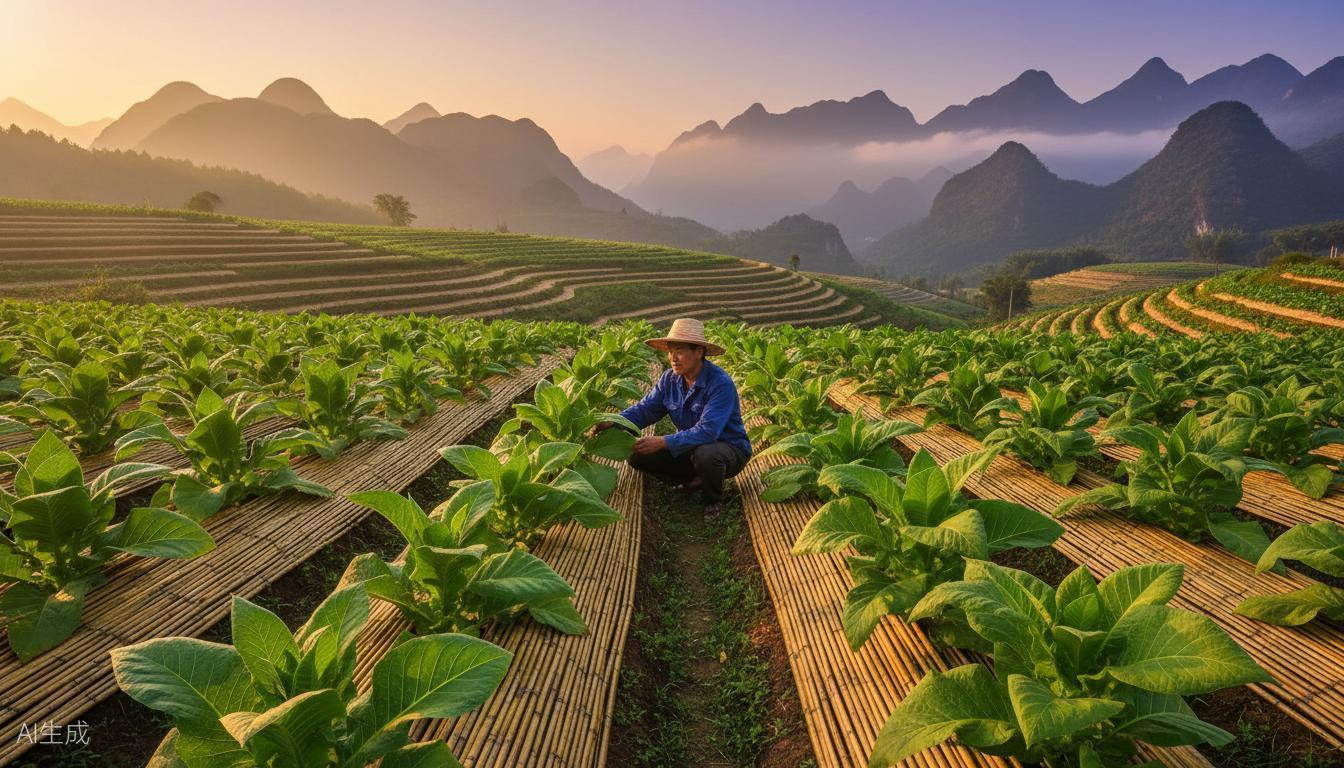
In Yunnan tobacco production, mulch film is used mainly for moisture retention and temperature management during early growth. Buyers considering bamboo mulch film for flue-cured tobacco need to check not only whether it lasts through the critical growth period, but also whether it affects root development and leaf quality positively enough to justify the change.
What does the field design show?
| Factor | Trial Detail |
|---|---|
| Location | Zhanyi District, Qujing, Yunnan |
| Altitude | About 1,950 m |
| Crop | Yunyan 87 flue-cured tobacco |
| Coverage period | About 60 days from transplanting to vigorous growth |
| Sampling cycle | Every 15 days |
What happened to moisture and roots?
The article shows that bamboo mulch film retained moisture clearly above the no-film control and only slightly below PE at some points, while root development after 60 days was stronger than under PE. That suggests a trade-off many growers can accept: slightly less sealing than PE, but better soil aeration and root growth.
How did crop value compare?
| Indicator | Bamboo Mulch Film | PE Film | Difference |
|---|---|---|---|
| Dry tobacco yield | 168 kg/mu | 162 kg/mu | +3.7% |
| Top-grade leaf ratio | 42.5% | 38.2% | +4.3 points |
| Average price | RMB 28.5/kg | RMB 26.8/kg | +6.3% |
| Output value | RMB 4,788/mu | RMB 4,342/mu | +10.3% |
If your tobacco program is evaluating bamboo mulch film, compare coverage duration, root development, and leaf-grade improvement together. In tobacco, quality often matters as much as field yield.
Request Quote