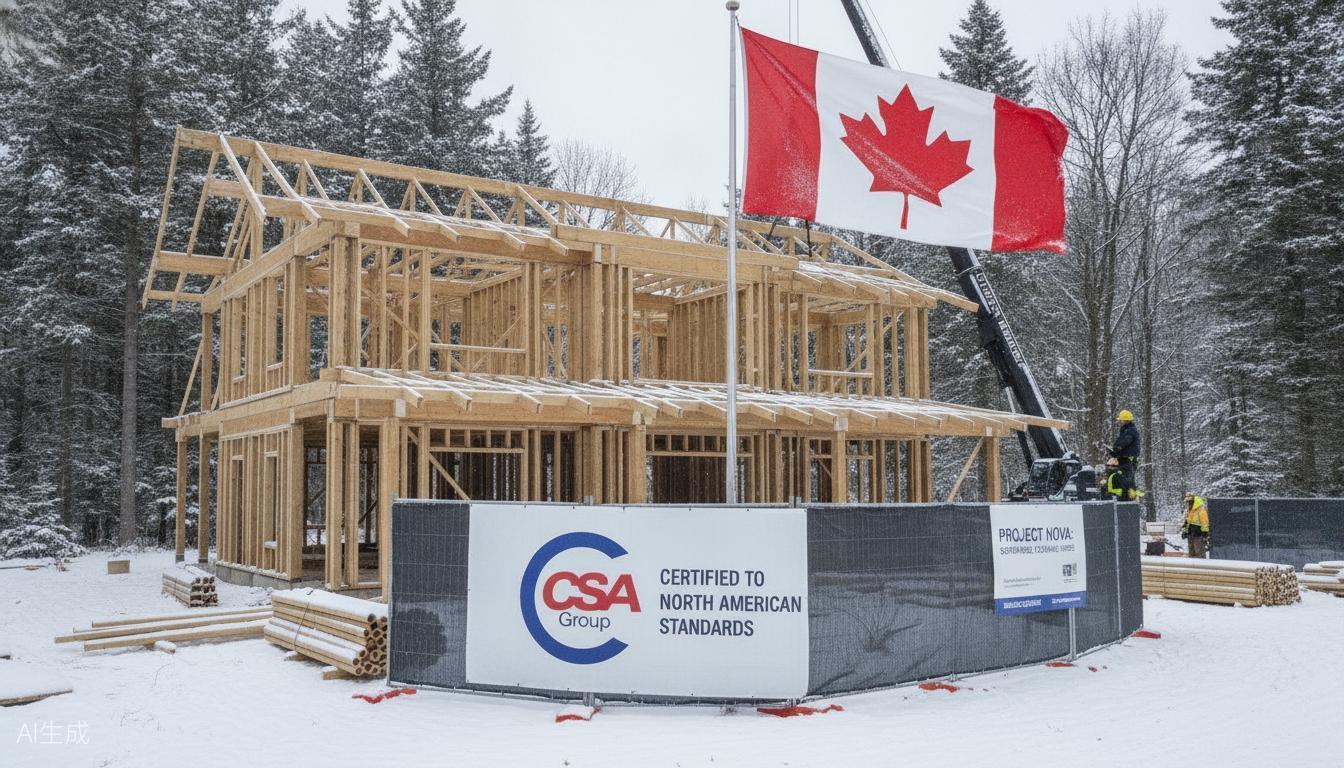
Canada can be a promising market for bamboo-based building materials, but importers should not assume that EU or US building files are enough by themselves. In many cases, the more practical review path involves a combination of relevant CSA standards, CCMC technical evaluation for nontraditional products, and province-specific acceptance logic.
Where do CSA and CCMC usually fit?
| Route | Typical Role | How It Relates to Bamboo Building Materials |
|---|---|---|
| CSA standard route | Applies where a product can reasonably fit an existing standard family | Useful for products such as bamboo flooring or panel-based materials where comparable standard logic exists |
| CCMC technical evaluation | Used when the product is more innovative or less directly covered by an existing route | Often important for bamboo composite boards, wall systems, and other alternative building products |
| Province-level acceptance review | Local building practice may still influence adoption | Buyers should confirm the target province rather than assuming a single national answer |
What should importers usually prepare?
- Product specification and intended-use statement, including whether the product is structural, decorative, flooring, or cladding related.
- Mechanical, durability, and fire-related test support matched to the intended application.
- Quality-control-system information showing consistent production and traceability.
- Installation guidance and maintenance instructions for the Canadian-use scenario.
- Bilingual labeling and market-facing documentation where required.
Why does CCMC matter so much for innovative materials?
Because many bamboo building products do not sit perfectly inside the most familiar North American product categories. CCMC can provide a more practical technical-evaluation path to show that the product meets Canadian building-code expectations even when a straightforward off-the-shelf standard path is limited.
Time and budget expectations
For technical-evaluation work, buyers and suppliers should usually plan a multi-month review rather than expecting a quick paperwork step. Depending on test readiness and documentation quality, a CCMC-related process can easily take roughly 3-6 months, and project cost may also be meaningful enough that market prioritization should be discussed first.
Why should buyers confirm the province early?
Because practical adoption conditions can vary by province. Some markets are more open to greener alternative materials, while others expect a fuller technical package before accepting unfamiliar bamboo-based building products.
If your bamboo building-material project targets Canada, confirm the intended province, product role, and likely standard path before preparing the first commercial order. That usually saves far more time than trying to solve code-acceptance questions after shipment planning has begun.
Request Quote