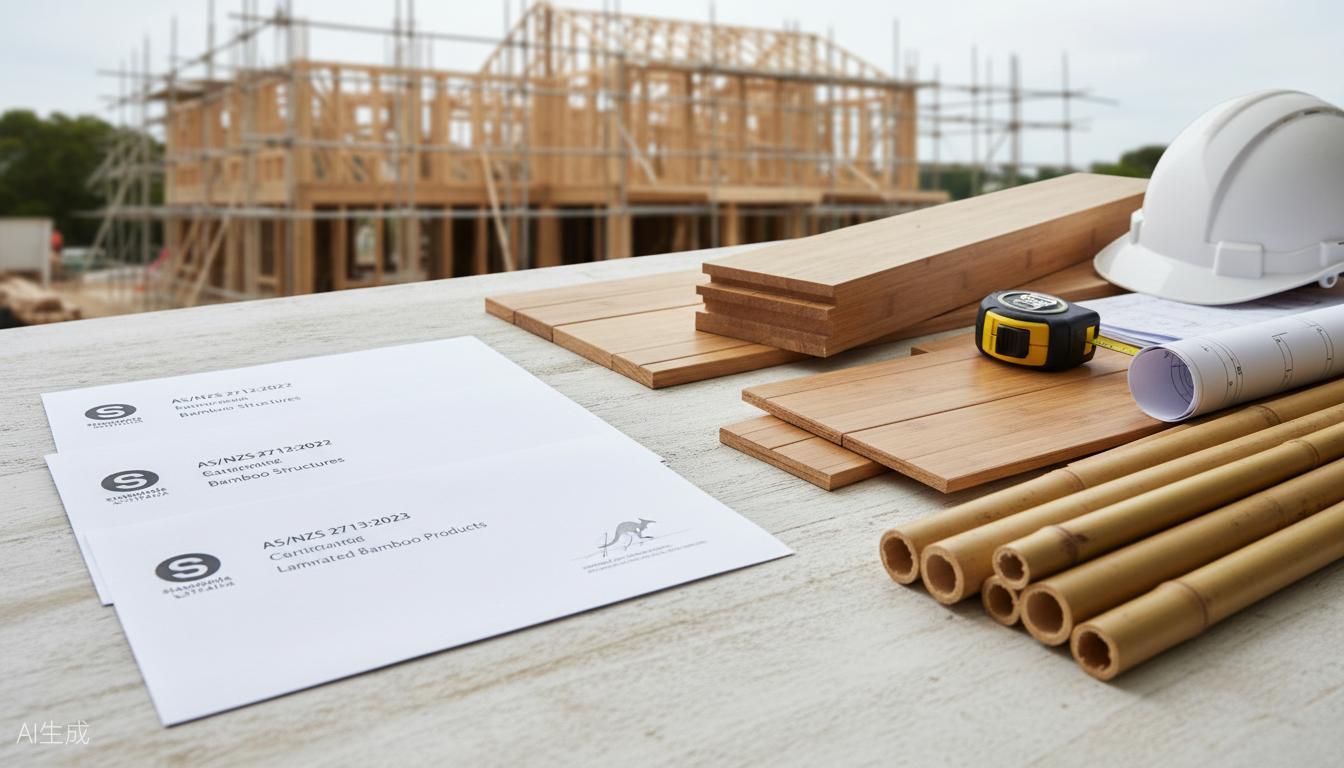
Australia and New Zealand use a linked AS/NZS standards system, but the practical compliance route still depends heavily on product type. For bamboo products, buyers usually need to separate building materials, food-contact packaging, and children’s products instead of asking for one universal “Australia certificate”.
Which product groups need to be separated first?
| Product Group | Main Focus | Typical Review Direction |
|---|---|---|
| Building materials | Performance under building-code expectations | AS/NZS test support plus project-specific acceptance logic |
| Food-contact packaging | Migration and food-safety suitability | AS 2070 and food-contact review under the Australia-New Zealand food framework |
| Children’s products | Mechanical safety, chemical safety, and labeling | AS/NZS ISO 8124-related review where applicable |
What matters for bamboo-based building products?
For bamboo boards, composite panels, and related building products, importers should focus on the actual intended use rather than on the material name. The key questions are whether the product can meet the relevant structural, fire, weathering, and formaldehyde-related expectations, and whether an established standard path exists.
Why should food-contact and children’s items be reviewed separately?
- Food-contact articles need migration and material-safety review based on the real use scenario.
- Children’s products require more explicit physical and chemical safety review, often including small-parts, edge, and heavy-metal related concerns.
- A bamboo child-feeding item may need both product-safety and food-contact review at the same time.
When is CodeMark worth discussing?
CodeMark can become relevant when a bamboo building product is innovative enough that the buyer wants a clearer compliance path under the Australian building framework. It is not the default answer for every project, but it can be useful where conventional standard matching is not strong enough.
A stronger Australia entry checklist
- Confirm HS direction and tariff treatment, including any origin-related documentation if relevant.
- Identify whether the product is treated as building material, packaging, or children’s product before testing begins.
- Request the specific test route instead of a generic compliance statement.
- Check packaging, labeling, and local-market presentation needs in parallel with technical review.
If your bamboo product is heading to Australia, define the product category and use case first. That one step usually makes the compliance route much clearer and avoids paying for the wrong tests.
Request Quote