
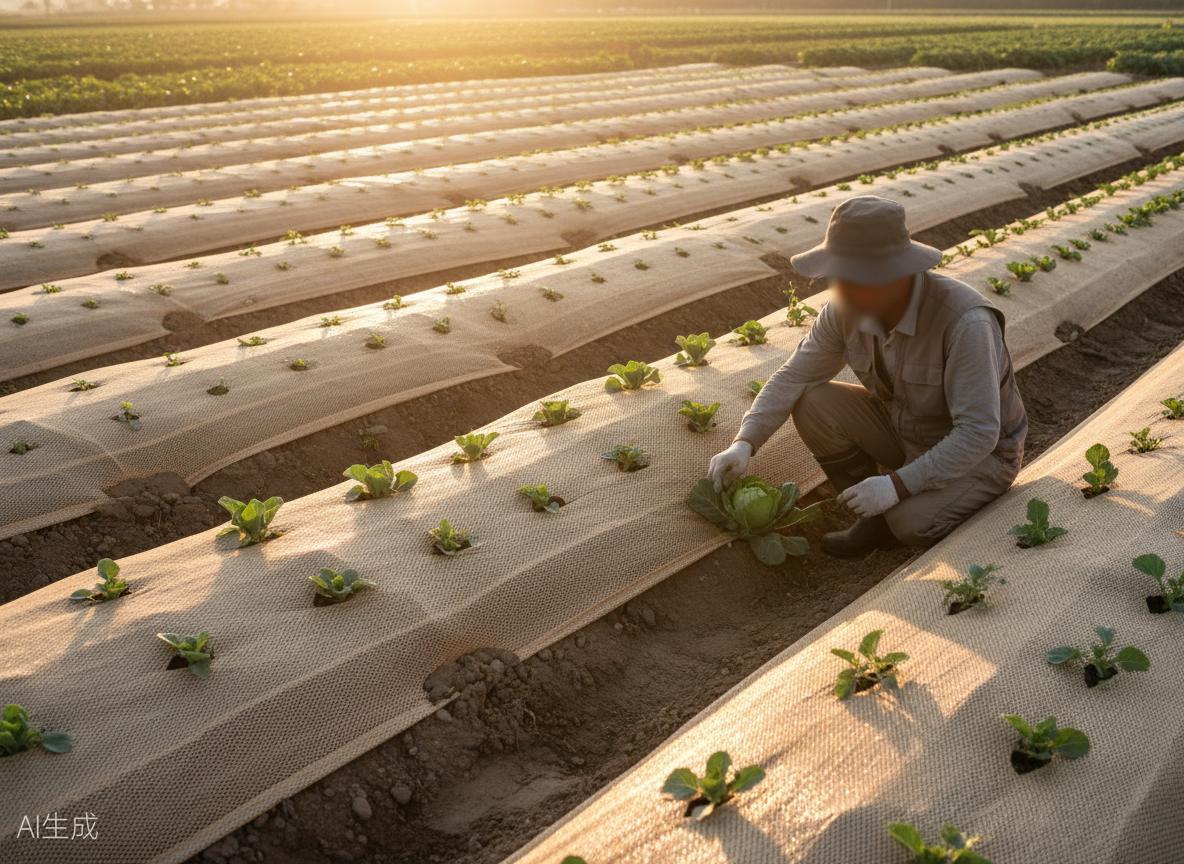
Unlike many industrial materials, bamboo mulch film has to be judged in real field conditions. Soil temperature, humidity, crop cycle, film thickness, and local climate all affect how it performs and how fast it breaks down. For buyers, the first order is not mainly about pushing the lowest price. It is about building a repeatable trial-order and scale-up logic.
Four basics to confirm before the first order
- Crop cycle: short-season vegetables, orchard cover, and cash crops require different stability windows and thickness choices.
- Local climate: high heat, high humidity, drought, or low temperature can shift the degradation rhythm significantly.
- Laying method: manual laying and machine laying place different demands on strength and width.
- Residual-film tolerance: some projects allow slight later-stage residue while others expect plow-in behavior after the season.
Why start with a small field trial?
Because the most important question is not whether the film is biodegradable in principle, but whether it performs through your actual crop cycle. A practical approach is often to run trials on one to three plots, then record the 30-day, 60-day, and 90-day condition before deciding whether larger-volume purchase makes sense.
A more useful first-order risk checklist
| Stage | Recommended Action | Purpose |
|---|---|---|
| Before sampling | Confirm thickness, width, and target degradation window | Avoid heading in the wrong development direction |
| Field-trial stage | Record temperature, humidity, breakage rate, and moisture-retention effect | Verify real field performance |
| Review stage | Compare labor and residue-handling cost against the existing mulch route | Judge long-term replacement value |
| Before scale-up | Check supplier batch consistency and delivery reliability | Avoid a strong trial order followed by unstable mass supply |
Do not ask only whether it degrades
A better supplier discussion is to ask when degradation usually begins, when clear weakening appears, whether different thickness options exist, and whether the supplier has data from similar climates. If the answer stays at the level of “yes, it degrades,” the supplier may not be ready for a real agricultural program.
For bamboo mulch film, the first order is really a real-environment validation stage. A well-designed trial plan usually matters more than saving a few cents per kilogram in the first quotation.
Request Quote