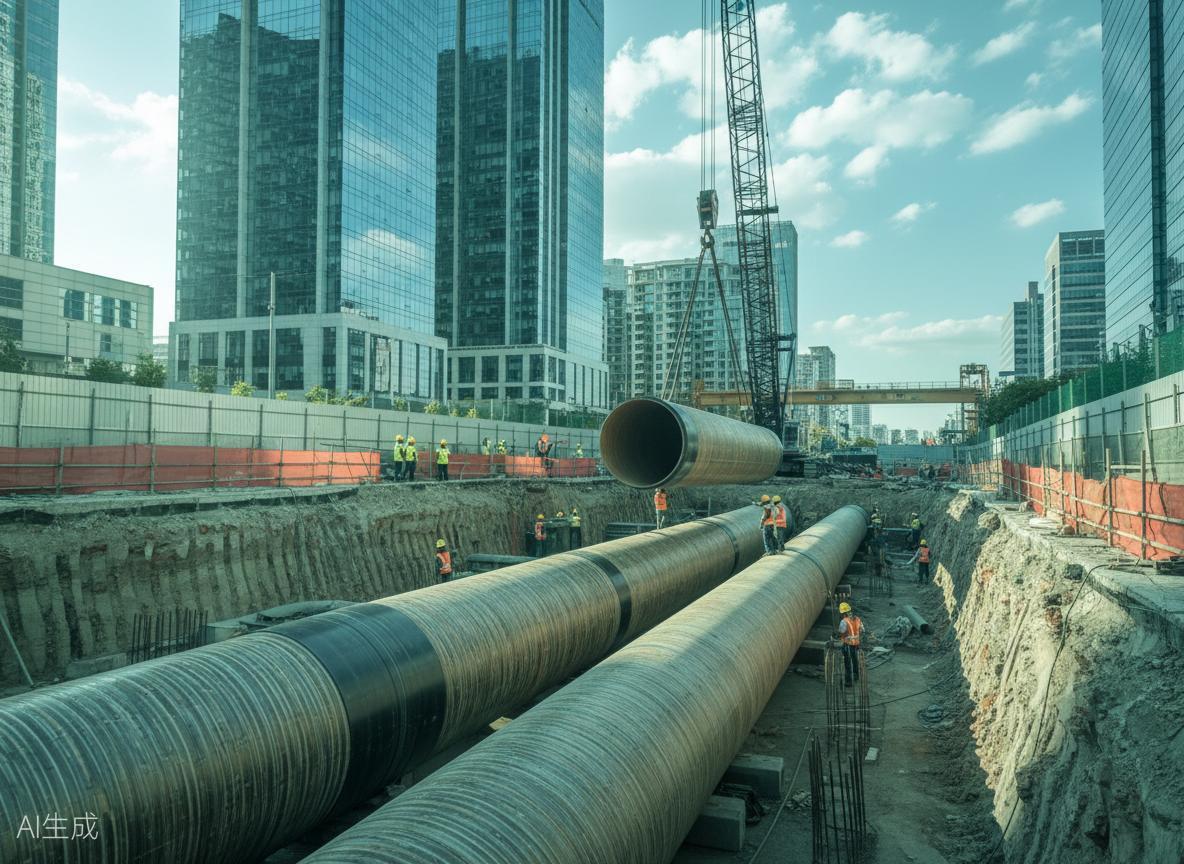
Bamboo winding composite pipe and HDPE pipe serve different project logics. HDPE is a mature, globally familiar route. Bamboo winding composite pipe is more often discussed in larger-diameter and lower-pressure municipal or drainage scenarios. The right choice depends on diameter, pressure class, installation method, approval path, and project specification.
Material and structural comparison
| Parameter | HDPE Pipe | Bamboo Winding Composite Pipe |
|---|---|---|
| Material base | High-density polyethylene | Bamboo-based reinforcement with resin system |
| Pressure positioning | Well established across broader pressure ranges | More often positioned in lower-pressure and larger-diameter scenarios |
| Flexibility | Flexible pipe route | More rigid pipe behavior |
| Connection logic | Thermal fusion is common | Socket, gasket, or flange-type logic may be used depending on system |
Where does each route usually fit better?
- For pressure water-supply systems, HDPE is often the more conservative and specification-friendly option.
- For large-diameter gravity drainage, stormwater, or some irrigation scenarios, bamboo winding composite pipe may attract attention on diameter and project-cost logic.
- For international projects, approval and standard acceptance should be checked early because specification compatibility often decides the project faster than material performance discussion alone.
Installation and project management considerations
HDPE benefits from well-known fusion practice and flexible laying behavior. Bamboo winding composite pipe can require different lifting, alignment, and joint-management logic because it behaves more like a rigid system. Buyers should compare not only material price, but also installation method, crew familiarity, and project acceptance risk.
What should engineering buyers request?
- Third-party testing for ring stiffness, axial performance, and relevant project-specific checks.
- A clear statement of pressure range and intended service scenario.
- Reference projects with similar diameter and installation environment.
- Quality-management evidence and traceable production control.
If you are comparing pipe options for a municipal or infrastructure project, send the diameter range, pressure class, installation environment, and approval requirements first. Those factors matter more than a simple material-vs-material comparison.
Request Quote