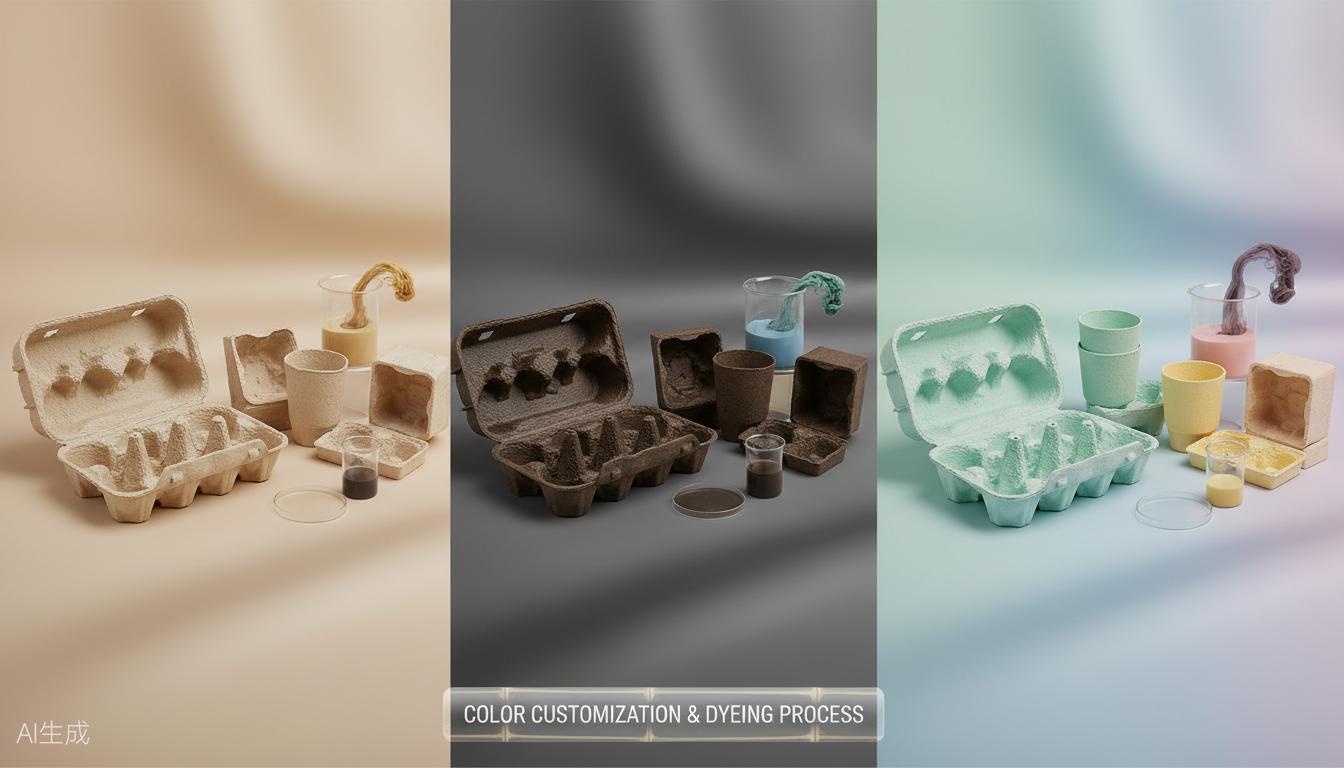
Color customization can change how bamboo molded pulp fits a brand. Buyers usually compare natural fiber color, carbonized darker tones, and dyed routes by appearance, durability, compliance, and how well they match the target channel.
How do the main color routes differ?
| Route | Visual Effect | Main Trade-Off |
|---|---|---|
| Natural color | Most authentic fiber appearance | Limited brand-color control |
| Carbonized tone | Darker premium or earthy look | Heat treatment can affect brittleness and smell perception |
| Food-safe dyeing | Broader color range | Need to confirm the dye route matches food-contact or target-market requirements where relevant |
| Printed color accents | Localized brand-color flexibility | Does not change the whole substrate color |
When does natural color work best?
Natural color is usually strongest for organic, natural, or sustainability-led branding where the fiber appearance itself is part of the message.
Why should buyers check color stability and compliance?
Because deeper colors or dyed routes may affect food-contact review, compostability messaging, or long-term visual consistency under light exposure. Color is not only a design choice; it can affect the technical file too.
If you need colored bamboo molded pulp packaging, define the brand tone and the compliance route together. The best-looking color option is not always the best regulatory choice.
Request Quote