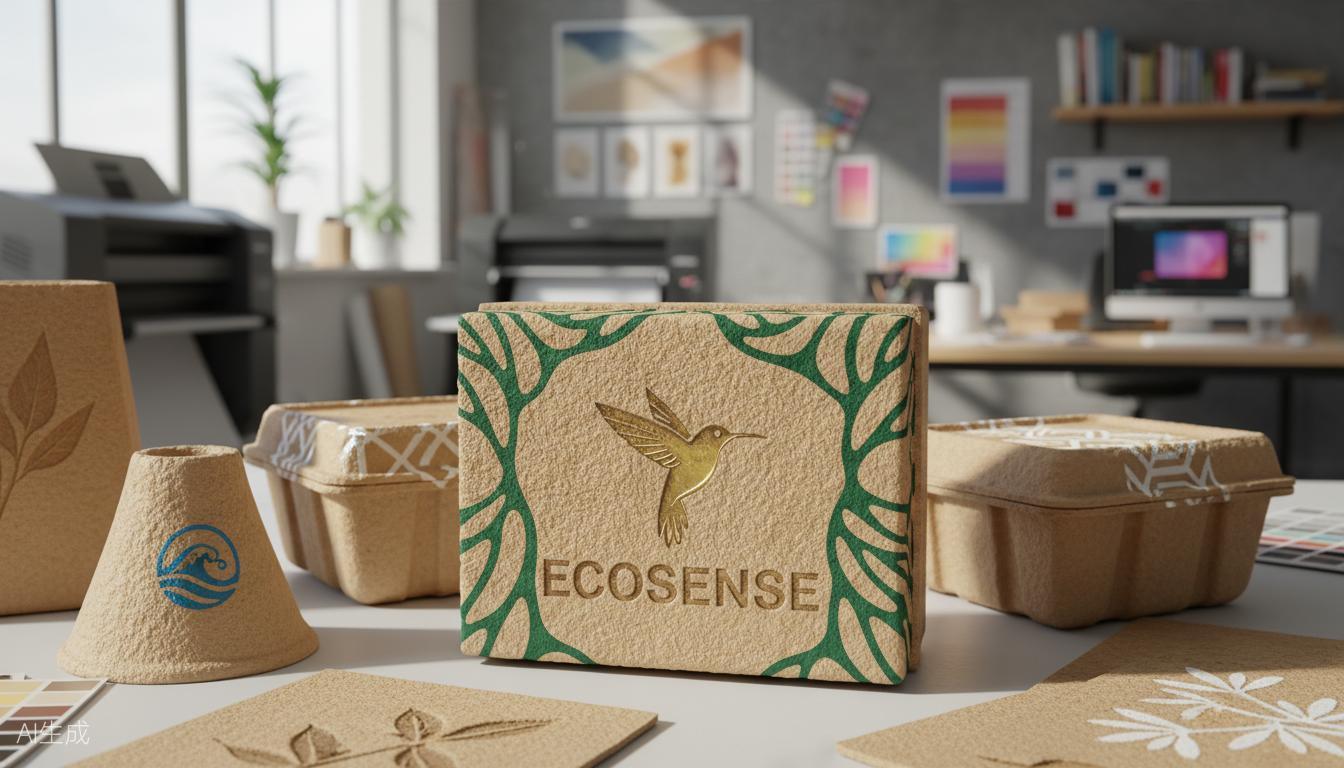
Brand presentation on bamboo molded pulp depends heavily on the print route. Buyers usually compare screen printing, UV printing, and foil stamping by adhesion, visual effect, durability, and cost rather than by appearance alone.
How do the main printing methods differ?
| Method | Best For | Main Trade-Off |
|---|---|---|
| Screen printing | Simple logos and 1-3 color jobs | Lower image complexity but lower cost and broader production familiarity |
| UV printing | Full-color graphics and more detailed brand work | Higher cost and more sensitivity to surface condition |
| Foil stamping | Premium metallic logo or decorative highlight | Usually limited to simpler metallic effects rather than full graphics |
What affects adhesion most?
- Surface moisture should be controlled before printing because high moisture weakens adhesion and finish consistency.
- Surface preparation such as smoothing or sealing can improve print performance.
- The natural texture of molded pulp still limits very fine image precision compared with smooth paperboard or plastic.
Which route is more durable?
For friction and moisture resistance, foil stamping and well-executed UV printing often perform more consistently than low-cost basic screen printing. But the right answer still depends on the expected transport and handling intensity.
If you need branding on bamboo molded pulp packaging, start by defining whether the goal is low-cost logo marking, full-color retail graphics, or premium gift-box presentation. That usually determines the print route quickly.
Request Quote