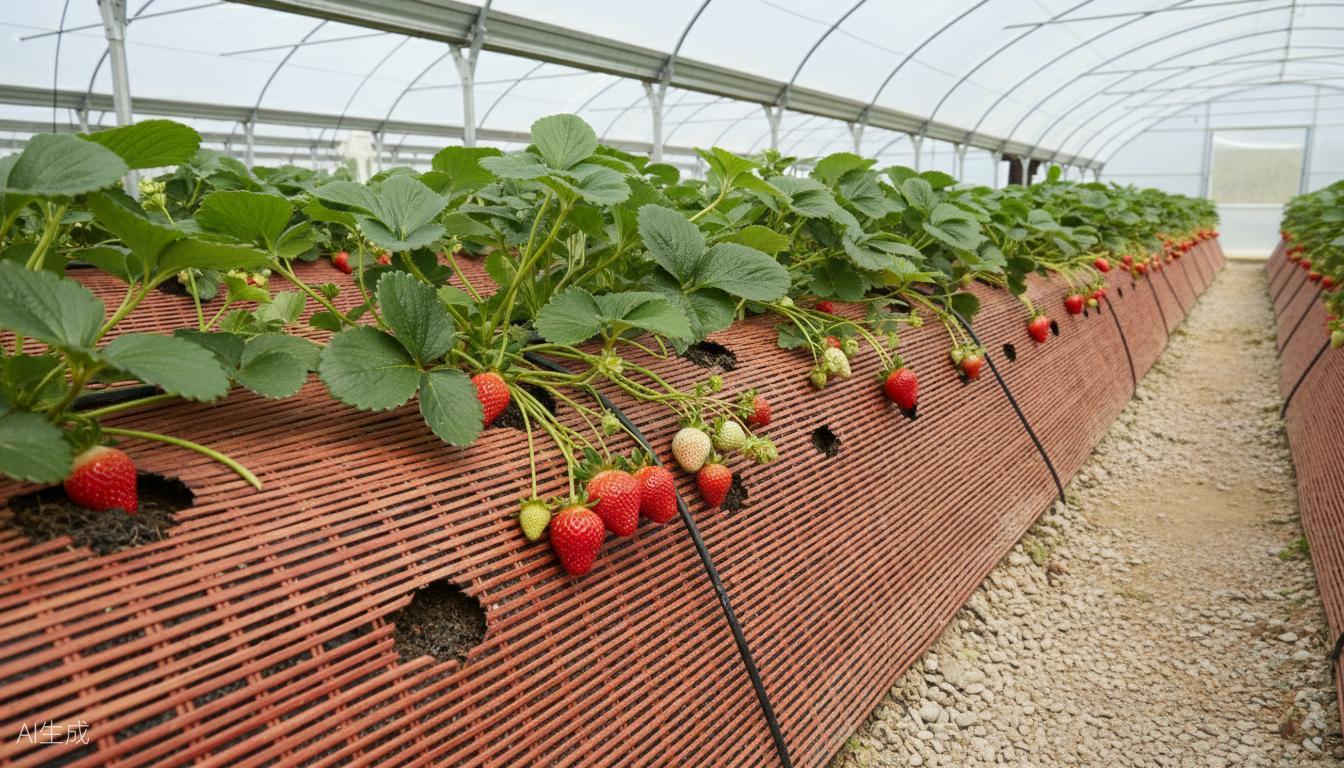
Strawberries are a high-value crop where small changes in fruit grade and sweetness can materially change revenue. That makes bamboo mulch film more interesting in strawberry production than in lower-value field crops, because the film does not need only to save labor. It can also shift quality and sale price.
What do the greenhouse trial numbers suggest?
| Indicator | Bamboo Mulch Film | PE Film | Difference |
|---|---|---|---|
| Yield per mu | 3,850 kg | 3,620 kg | +6.4% |
| Average Brix | 9.2 | 8.5 | +8.2% |
| Premium fruit rate | 68% | 58% | +10 points |
| Mulch-film cost | RMB 180/mu | RMB 90/mu | +RMB 90 |
| Film-recovery labor | RMB 0 | RMB 60/mu | Saves RMB 60 |
Why can sweetness and grade improve?
The article’s field logic suggests that better breathability than PE can support stronger root respiration, which may help sugar accumulation and fruit quality. In high-value strawberry production, that quality lift can outweigh the higher film price quickly.
How should buyers view the ROI?
Even when the mulch film itself costs more, the net added cost after recovery-labor savings can stay relatively small compared with the revenue gain from better fruit value. That is why bamboo mulch film often makes more economic sense first in premium or greenhouse strawberry projects rather than in the lowest-margin crops.
If your strawberry project is considering bamboo mulch film, compare it by fruit grade, Brix, and labor savings together. In premium fruit categories, the quality effect may matter more than the film price itself.
Request Quote