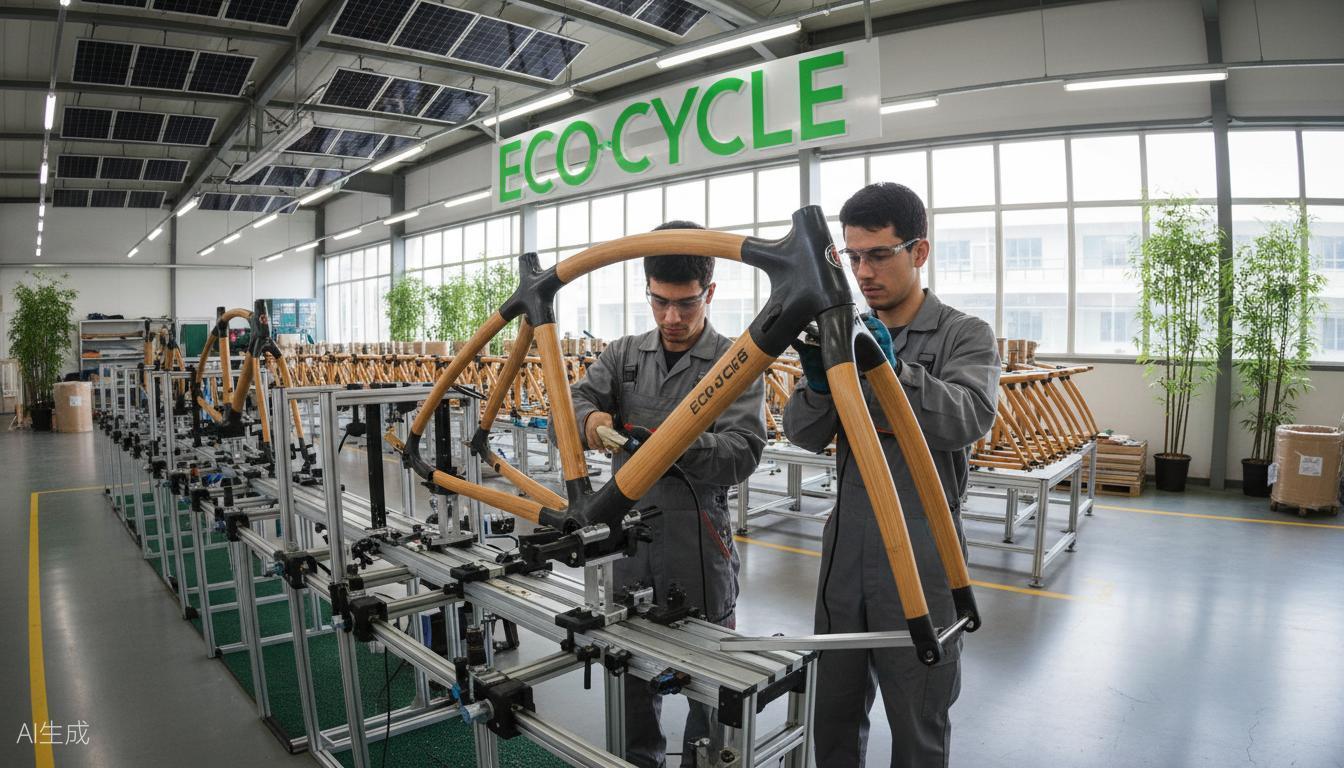
Can bamboo fiber composite be used for bicycle frames? This article examines stiffness, fatigue life, and vibration characteristics against carbon fiber and aluminum alloy.
Mechanical property comparison
| Property | Bamboo composite | Carbon fiber (T700) | Aluminum (6061) |
|---|---|---|---|
| Density (g/cm³) | 1.20 | 1.60 | 2.70 |
| Tensile strength (MPa) | 200–280 | 1,500+ | 310 |
| Elastic modulus (GPa) | 18–25 | 130 | 69 |
| Specific stiffness (kN·m/kg) | 15–21 | 81 | 26 |
| Fatigue life (10⁶ cycles) | Good | High | Moderate |
Feasibility assessment
Bamboo composite specific stiffness (15–21) is roughly one-quarter of carbon fiber (81), but density is lowest (1.20). To match carbon fiber stiffness, bamboo frames would need thicker walls or larger tube diameters, likely adding 30–50% weight. Fatigue life is acceptable for moderate-intensity riding such as city commuting and leisure cycling, but not for competitive racing.
B2B application recommendations
- City commuter bicycles: feasible, costing 60–70% less than carbon fiber.
- Bike-sharing: short service life, cost-sensitive, biodegradability is a plus.
- E-bikes: added weight matters less; natural texture is well received.
- Not recommended: road race bikes and mountain bikes where strength and stiffness are insufficient.
Exploring bamboo composite bicycle frames? We can provide material testing, tube-shape design, and sample fabrication.
Request Quote