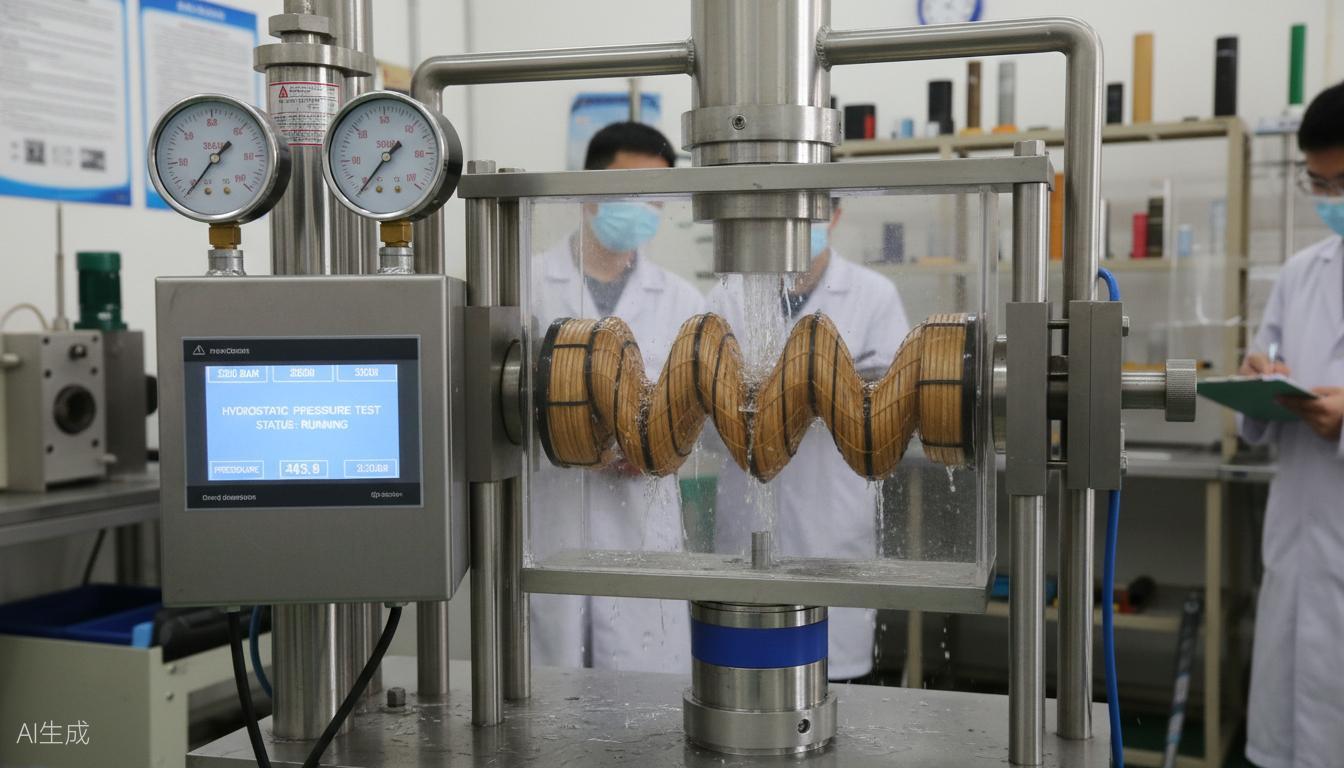
Hydrostatic testing is the core factory-acceptance step for bamboo winding composite pipe. This article explains static hydrostatic testing, burst-pressure testing, and cyclic-pressure testing methods and acceptance criteria.
Three pressure test types
| Test type | Pressure | Hold time | Pass criteria | Purpose |
|---|---|---|---|---|
| Static hydrostatic | 1.5×PN | 10 min | No leakage, no deformation | Factory acceptance |
| Burst pressure | Stepwise to failure | — | Burst ≥ 3×PN | Ultimate strength verification |
| Cyclic pressure | 0→1.5×PN cycles | 10,000 cycles | No leakage, no fatigue damage | Fatigue life verification |
DN600 PN1.0 MPa test example
| Test item | Result | Requirement | Judgment |
|---|---|---|---|
| Hydrostatic (1.5 MPa) | No leak, no deformation | No leak, no deformation | Pass |
| Burst pressure | 4.2 MPa | ≥3.0 MPa | Pass |
| 10,000 cycles | No leak | No leak | Pass |
| Residual deformation | 0.8% | <5% | Pass |
Equipment requirements
- Hydrostatic pump: range 0–10 MPa, accuracy ±1%.
- Pressure sensor: range 0–10 MPa, accuracy class 0.5.
- Timer: accuracy ±1 s.
- Safety: protective fencing required for burst tests.
- Water quality: clean water, temperature 15–25 °C.
Need hydrostatic testing for bamboo winding pipe? We can provide third-party pressure testing and factory inspection reports.
Request Quote